Efficient and Precise Heat Treatment 

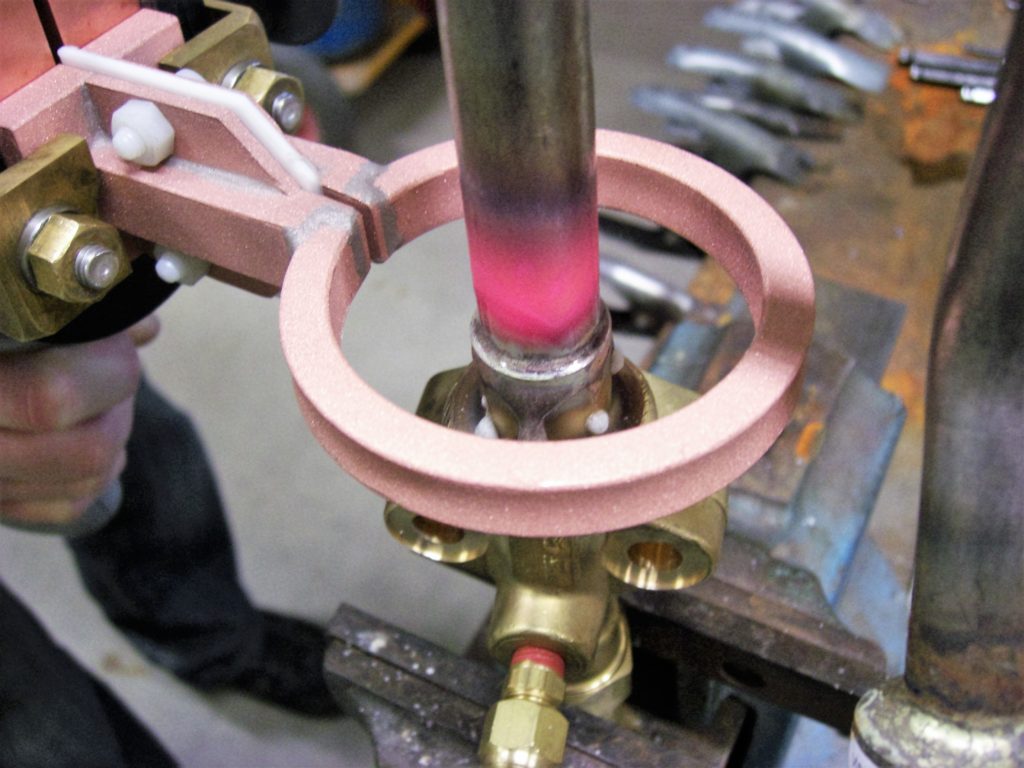
Induktionshärdning är en metod som används för att öka slitstyrkan i stål och andra metaller. Genom att använda elektromagnetiska fält hettas materialets yta upp snabbt och kyls sedan av omedelbart, vilket skapar en hård och slitstark yta medan kärnan förblir seg. 

Unlike traditional hardening methods, the process takes place without physical contact and with high precision. This makes induction hardening a cost-effective and energy-efficient alternative that can easily be integrated into a production line. 

When is induction hardening used? 

Induction hardening is used in several industrial sectors where components are exposed to high loads, wear and friction. Common applications include shafts and drive shafts in machinery and vehicles, gears and transmissions where friction properties need to be optimised, as well as camshafts and crankshafts in engines where long service life is required. The method is also used to harden machine components and tools, contributing to increased durability in industrial applications.  

Advantages of Induction Hardening

Reduced Environmental Impact

Because the process is targeted and energy-efficient, material waste and carbon emissions are minimised.

Precise and Controlled Process

Only the required surfaces are heated during induction hardening.

Short Processing Time
Induction hardening is a fast process that enables high productivity. 
Energy-Efficient Method

Lower energy consumption compared with traditional hardening methods.

Increased Wear Resistance and Service Life

Components that undergo induction hardening gain a hard and durable surface capable of withstanding high loads and wear.

Dragspelsinnehåll

Any components that require a hard and wear-resistant surface while the core retains its toughness, such as shafts, gears and machine components. 

Induction hardening takes place locally and without contact, making the process faster and more energy-efficient while reducing the risk of deformation. 

The component gains a highly wear-resistant surface while the core retains its mechanical properties, providing an optimal combination of hardness and toughness. 

How does induction hardening work?How does induction hardening work?

  1. Induction heating – A coil generates an electromagnetic field that rapidly heats the surface of the component.
  2. Rapid cooling (quenching) – Immediately after heating, the material is cooled by spraying or immersion in a cooling fluid.
  3. Hardening and tempering – After hardening, the component can undergo a tempering process to balance the hardness and toughness of the material.
map of the coil world

Contact us

Do you have questions about our products or what we can offer in the field of induction hardening? Whether you need to harden individual components or integrate induction hardening into your production line, we can help. 

Contact us today to request a quotation or discuss how we can optimise the wear resistance and performance of your components. 

Read our news

Induction hardening

Metal hardening

Metal hardening is a heat treatment process used to alter the properties of the material in order to increase hardness, wear resistance, and resistance to mechanical impact.

Read more »
induction

Hardening of steel  

Hardening of steel is a metallurgical process in which the internal structure of the material is altered to increase hardness and wear resistance. The process is used when components must withstand high

Read more »
Scroll to Top